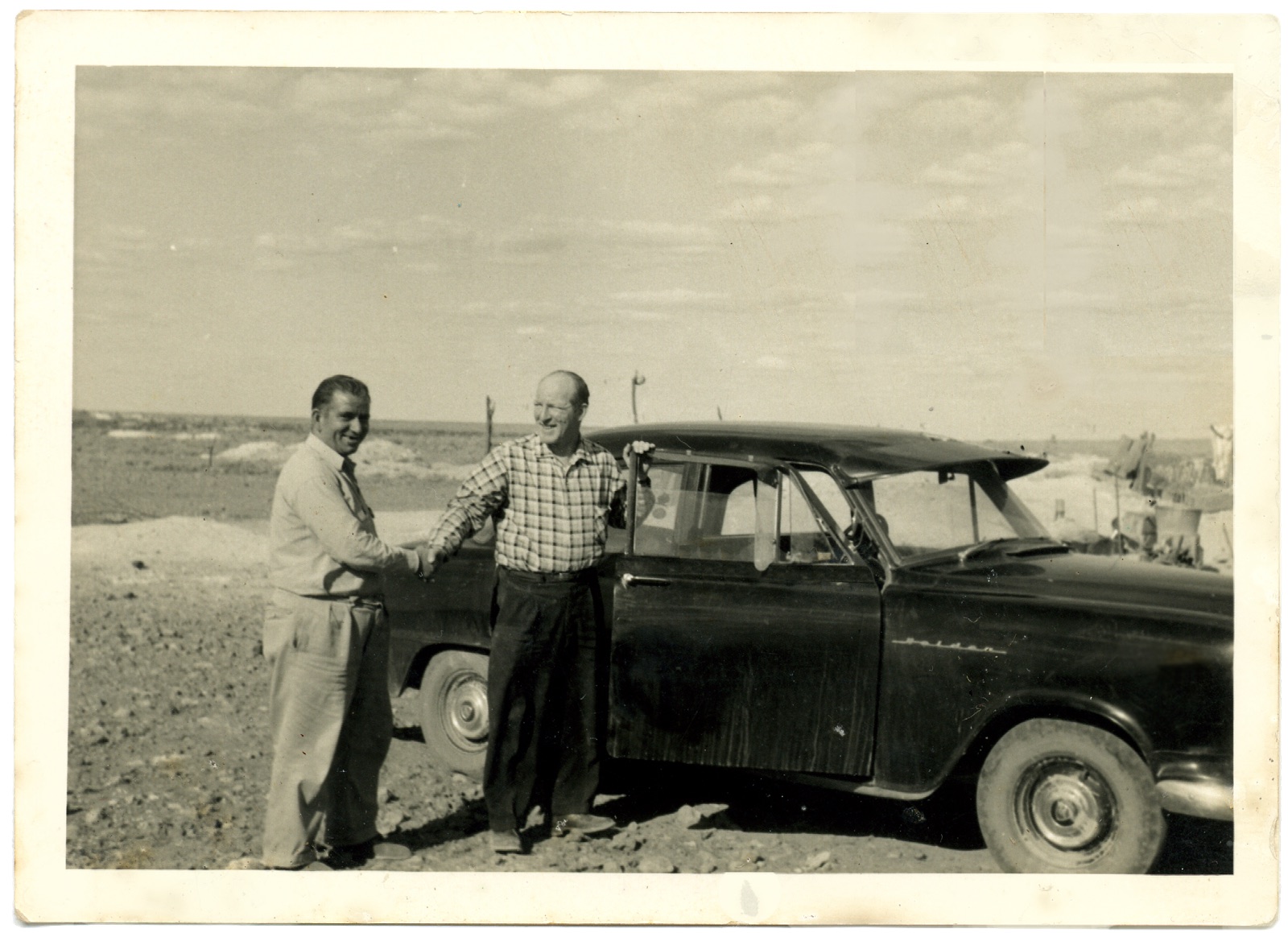
George Christianos Sr shakes hands with a French opal buyer beside a Holden on the Coober Pedy opal fields, 1960s

Three generations of opal miners

Coober Pedy 1956 · Mintabie · Lightning Ridge today — told in our family's own photographs.

Since 1956

A family, a claim, and a hand-dug shaft

Christianos Opals began in 1956, when George Christianos Sr. brought his family to the opal fields of Coober Pedy, South Australia. With his wife Zoe — the matriarch who kept a household running on the edge of the desert — and his sons, he worked the Eight Mile field with picks, windlasses and hand-sieved dirt.

George Sr. and Zoe raised four sons — Ross, Emmanuel, Peter and Elias — but on the field it was Emmanuel Christianos, the second-eldest, who was the engine of the operation: the “bulldozer” of the family, doing most of the physical work with hired helpers alongside him. Peter worked the dirt too before leaving to take up a claim of his own; Elias was still a boy. It was Emmanuel who would carry the business forward, and it bears his name to this day: Opals by Emmanuel Christianos Pty Ltd. He was also an avid photographer — most of what you see on this page is the field as he saw it.
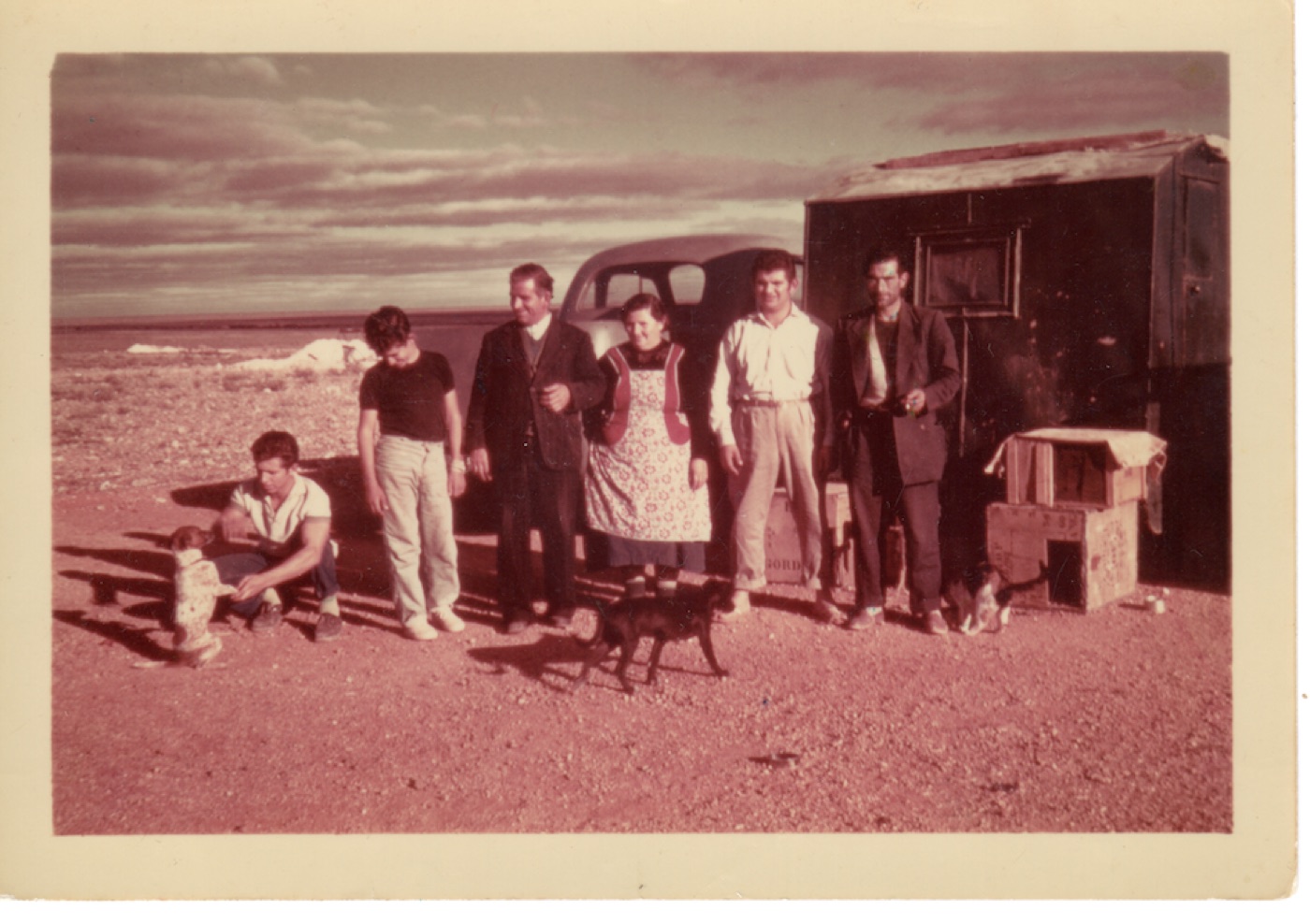
The Christianos family beside their truck and hut at the Eight Mile opal field, Coober Pedy, circa 1958
The family at the Eight Mile, Coober Pedy, circa 1958. From left: Peter (the third son, steadying one of the dogs), Elias (the youngest), George Sr., Zoe, and Emmanuel — the second-eldest son who would later run the business.
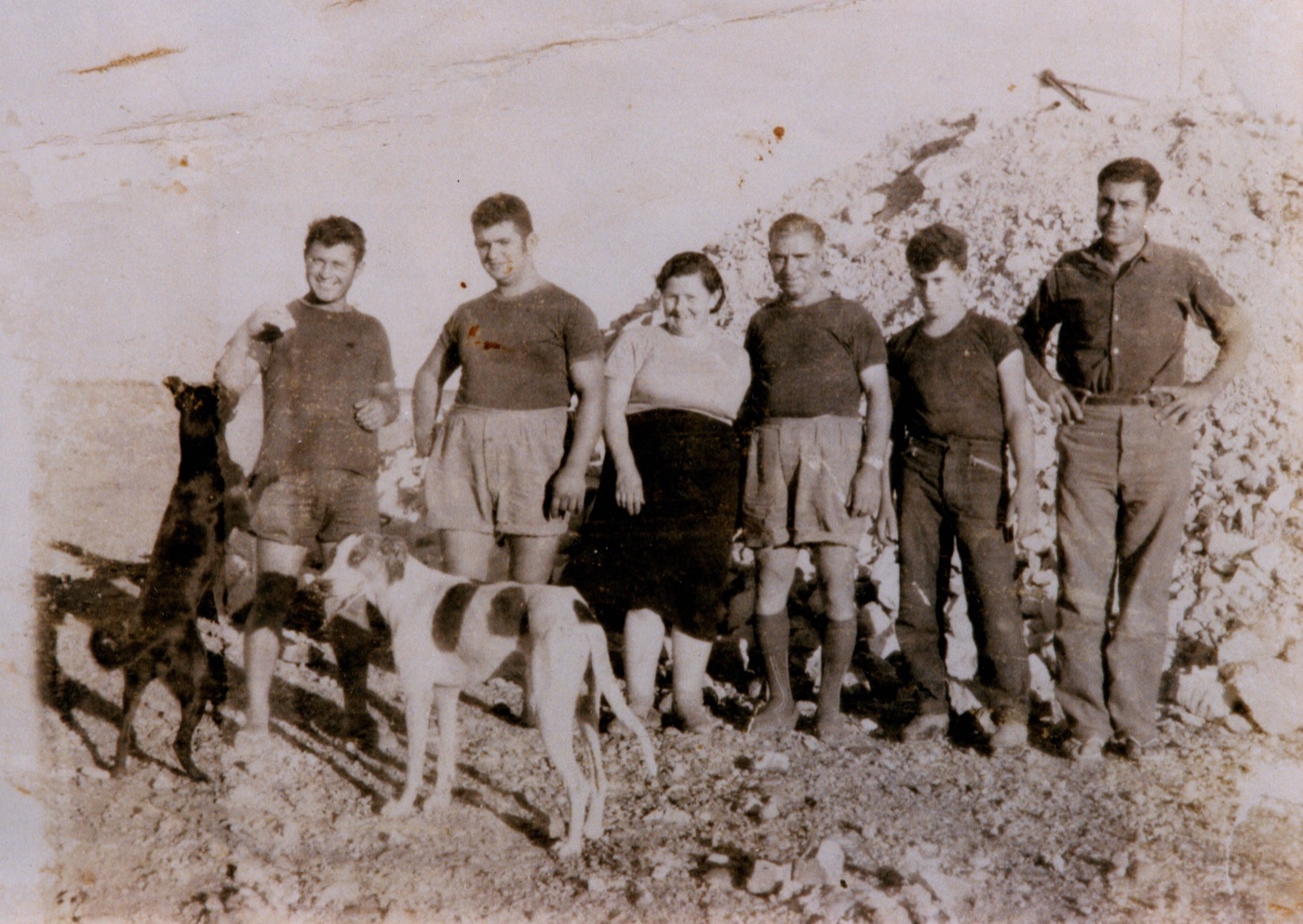
Family line-up with dogs in front of a mullock heap at the Eight Mile field, circa 1958
Against the mullock at the Eight Mile, circa 1958 — Emmanuel second from left, then Zoe and George Sr.
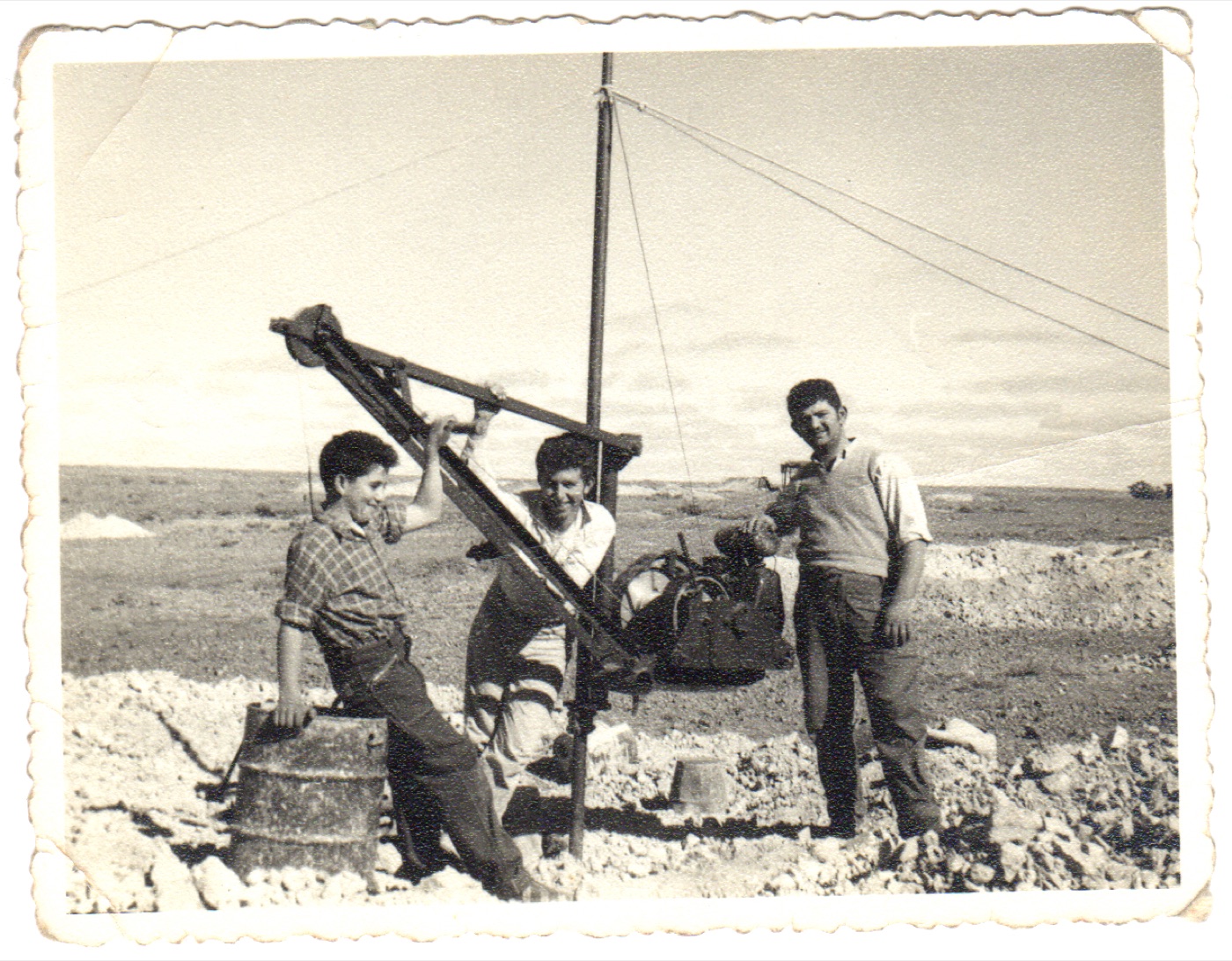
Elias, Peter and Emmanuel Christianos at a windlass over a shaft, Eight Mile field, circa 1958
Three brothers at the windlass, circa 1958–59: Elias at left, Peter centre, and Emmanuel at right.
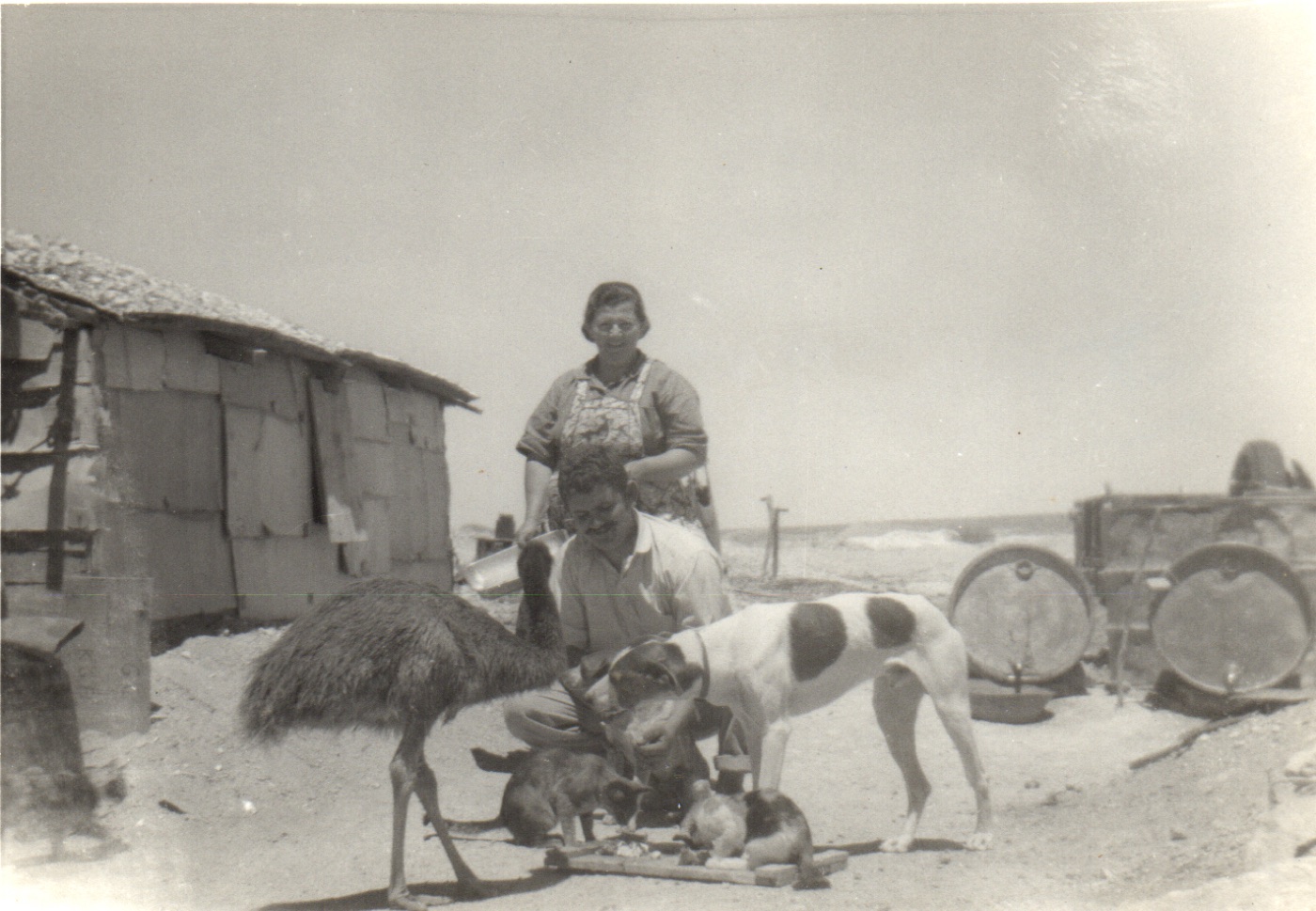
Zoe Christianos and young Emmanuel feeding his pet emu, dog and cats outside an iron hut, circa 1958
Desert domesticity: Zoe, a young Emmanuel, and his pets — an emu, a dog and the camp cats — outside the hut, circa 1958.
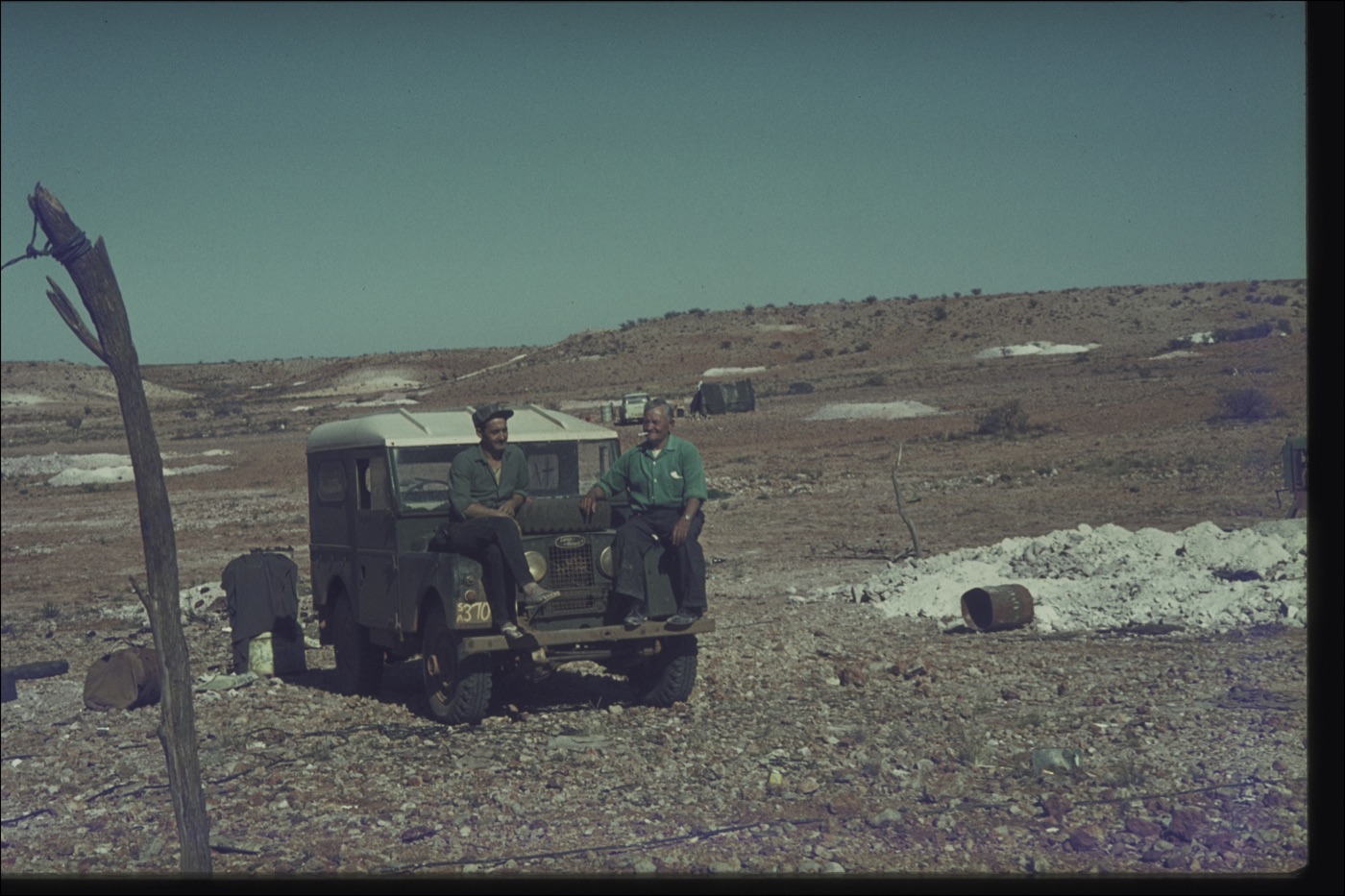
Two old miners sharing a smoke on the bonnet of George Sr's Land Rover, Eight Mile field, circa 1959
Two old-timers — friends of George Sr. — having a smoke on his Land Rover, Eight Mile, circa 1959.
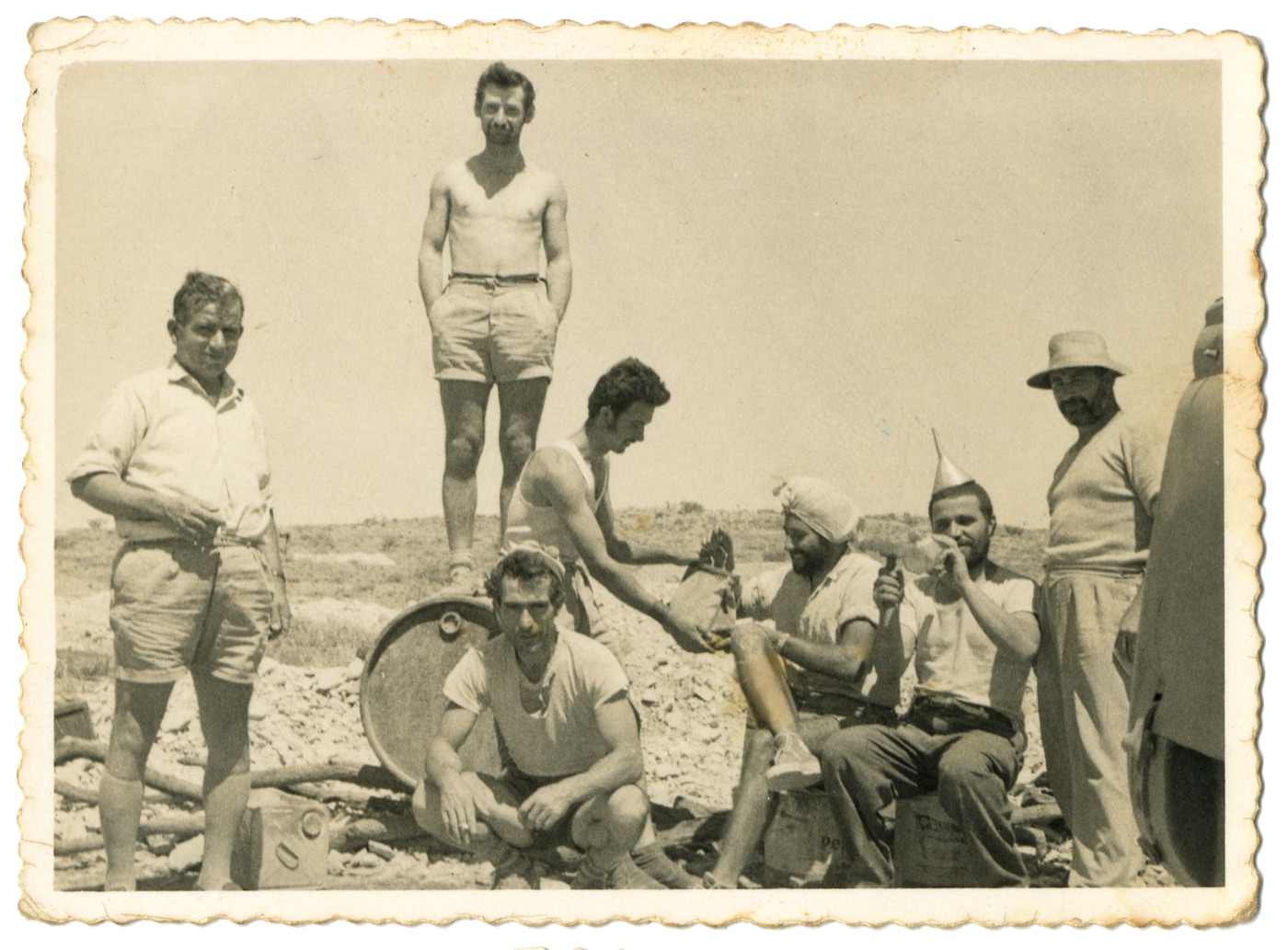
George Sr and the mining team at lunch on the Eight Mile field, one man playfully wearing an oil funnel as a hat, 1960
Lunch break on the field, 1960 — George Sr. at far left. The “party hat” is an oil funnel; some things about mining camps never change.

A first in Australian mining

The first bulldozer ever to work an opal mine

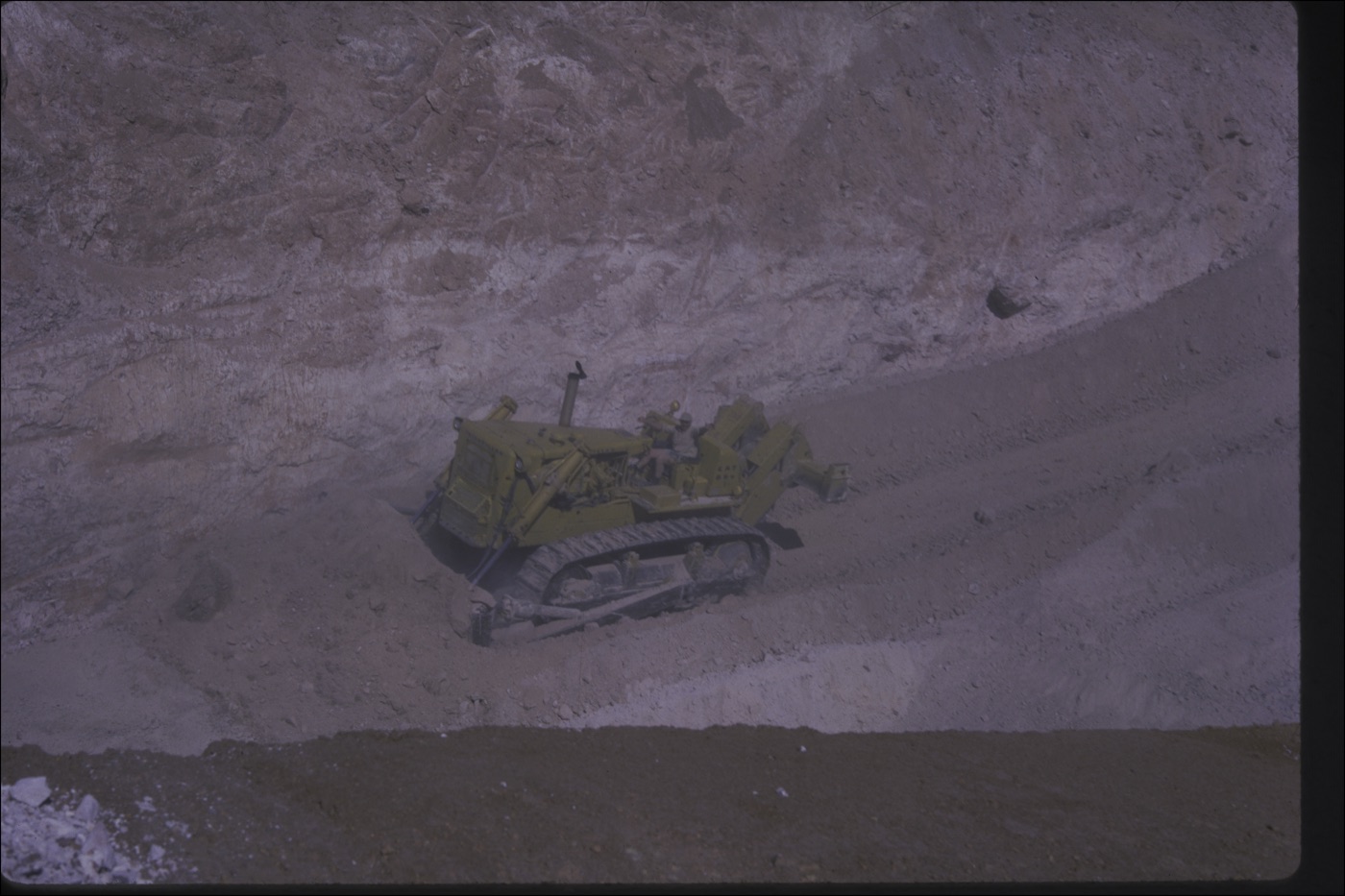
By the turn of the 1960s the family was working the Ten Mile field, where most of the opal level had already been taken. What remained was rich — but too dangerous to chase further underground. So Emmanuel and George Sr. did something nobody in the industry had done: they hired a bulldozer from the Holding Brothers — contractors who normally cut farm dams and roads — and took the level from the top.

It was, to the family's knowledge, the first bulldozer ever operated in an Australian opal mine — the beginning of the open-cut method that would reshape the industry, and that the family would master at Mintabie two decades later.
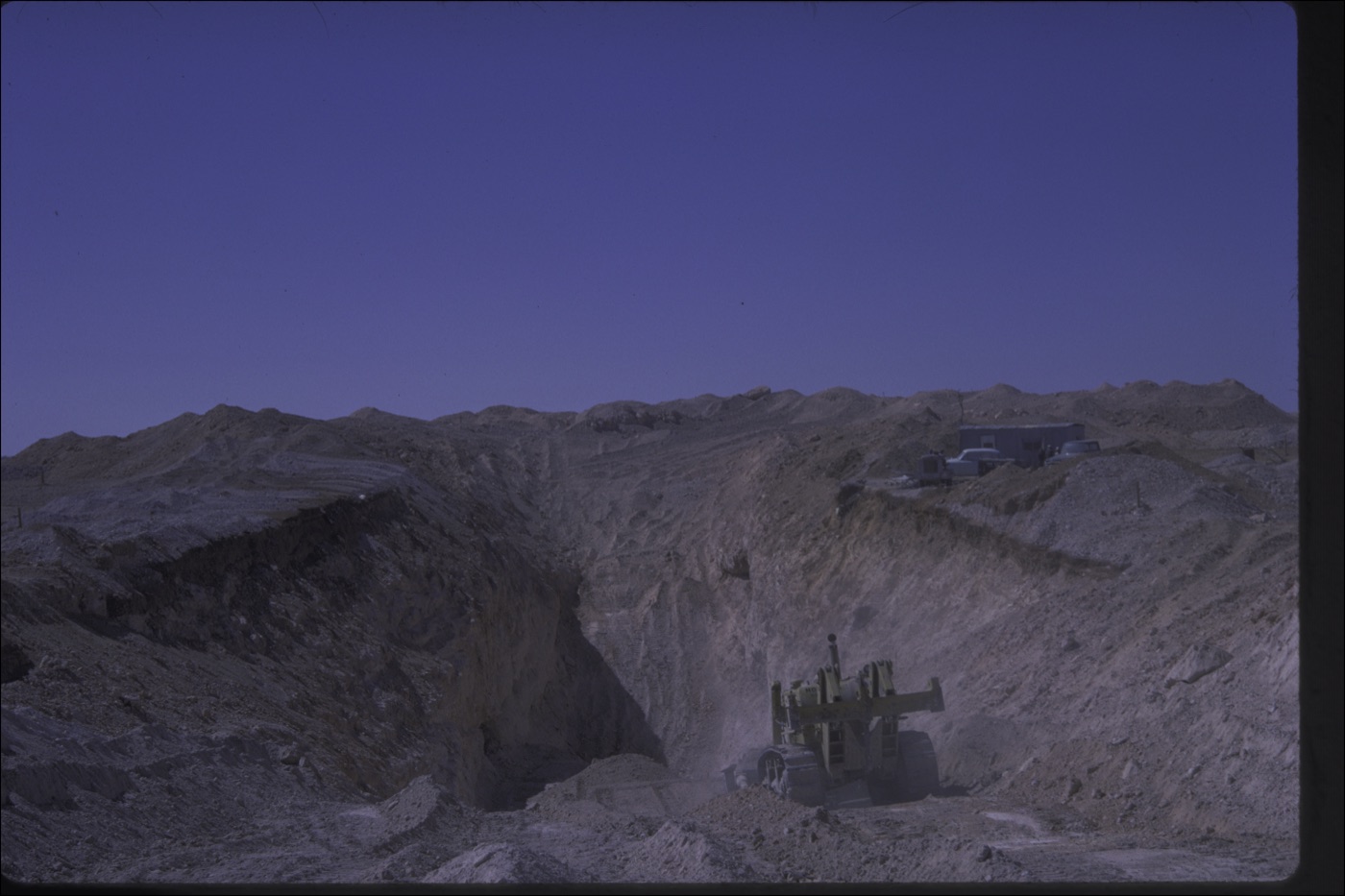
The hired bulldozer working an open cut at the Ten Mile field, Coober Pedy, with the camp on the rim
The hired dozer in the family's open cut at the Ten Mile, Coober Pedy — taking from the top what was too dangerous to mine from below.
Close view of the bulldozer cutting the opal level at the Ten Mile field
Cutting the level. Photograph by Emmanuel Christianos.
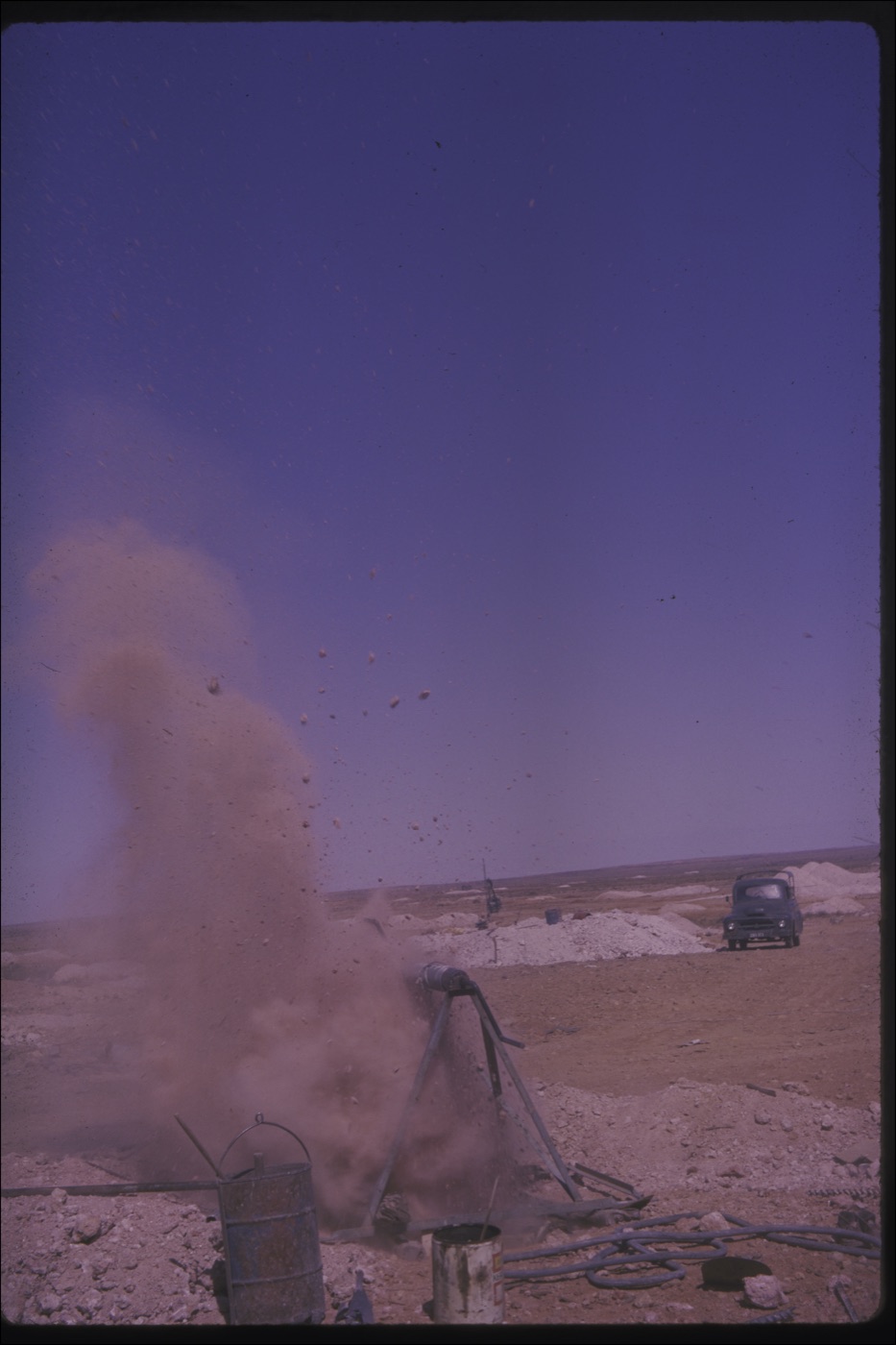
A blasting charge firing on the Coober Pedy opal field, debris in the air, photographed by Emmanuel Christianos
Firing a shot at the Eight Mile. Emmanuel set the charges — then stood close enough to photograph the debris in the air.

The export years

Buyers who crossed the world

Word of the family's parcels travelled far beyond the fields. The photograph at the top of this page shows George Sr. welcoming a buyer who had come all the way from France to the South Australian outback — the beginning of a friendship that lasted decades. The family has been exporting Australian opal to the world since the 1960s, and it has never stopped.


1980s – 1990s

Mintabie: opal mining at full scale

At Mintabie, in South Australia's far north-west, the open-cut method the family helped pioneer became an operation of real scale. At its peak the camp ran six Caterpillar D9 bulldozers, five scrapers, two prospecting drills and two excavators, with the support gear to keep them all turning — and the parcels to show for it.
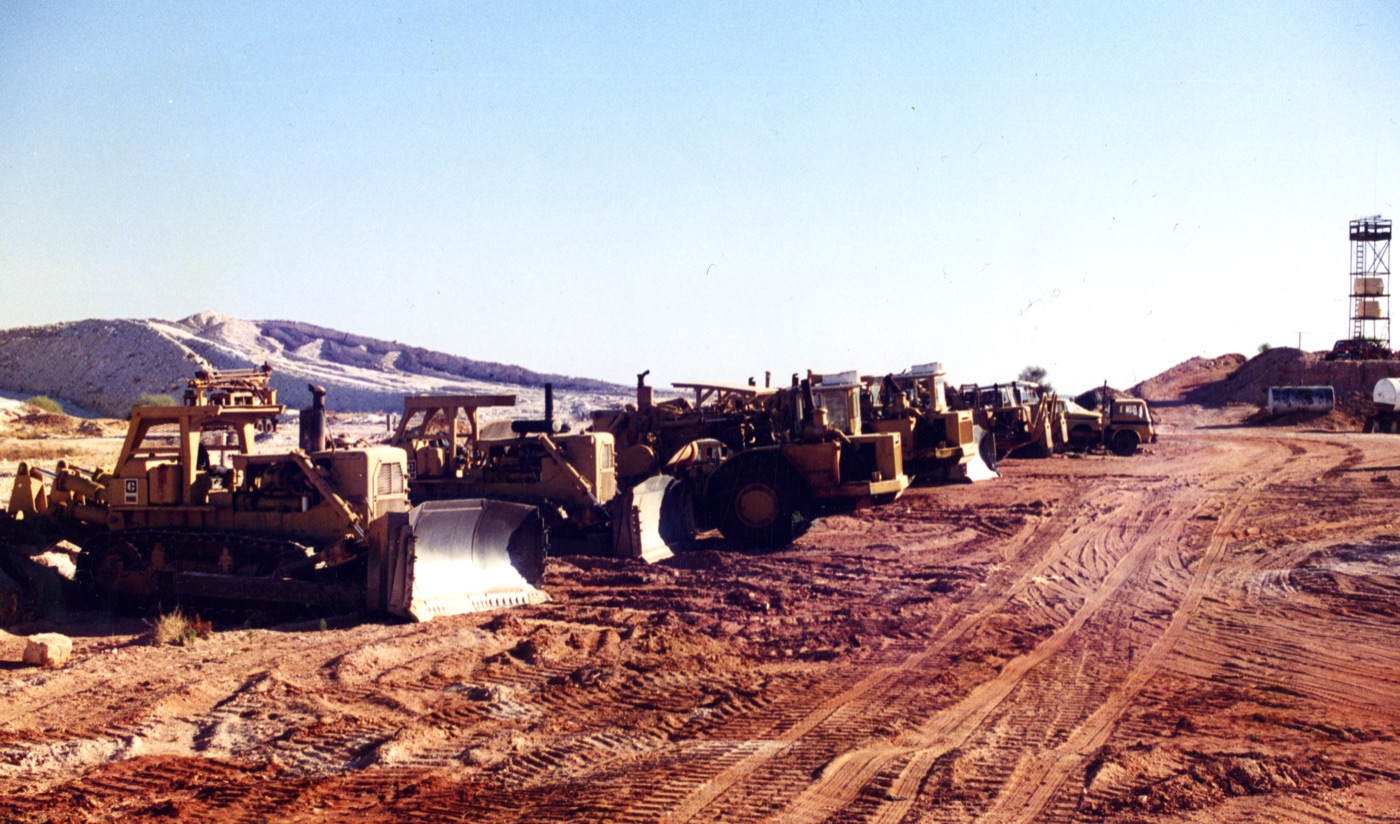
The Christianos machinery fleet lined up at Mintabie — D9 bulldozers, scrapers and loaders
Part of the fleet on parade at Mintabie — and this isn't all of it: the rest was out working or in the maintenance area.
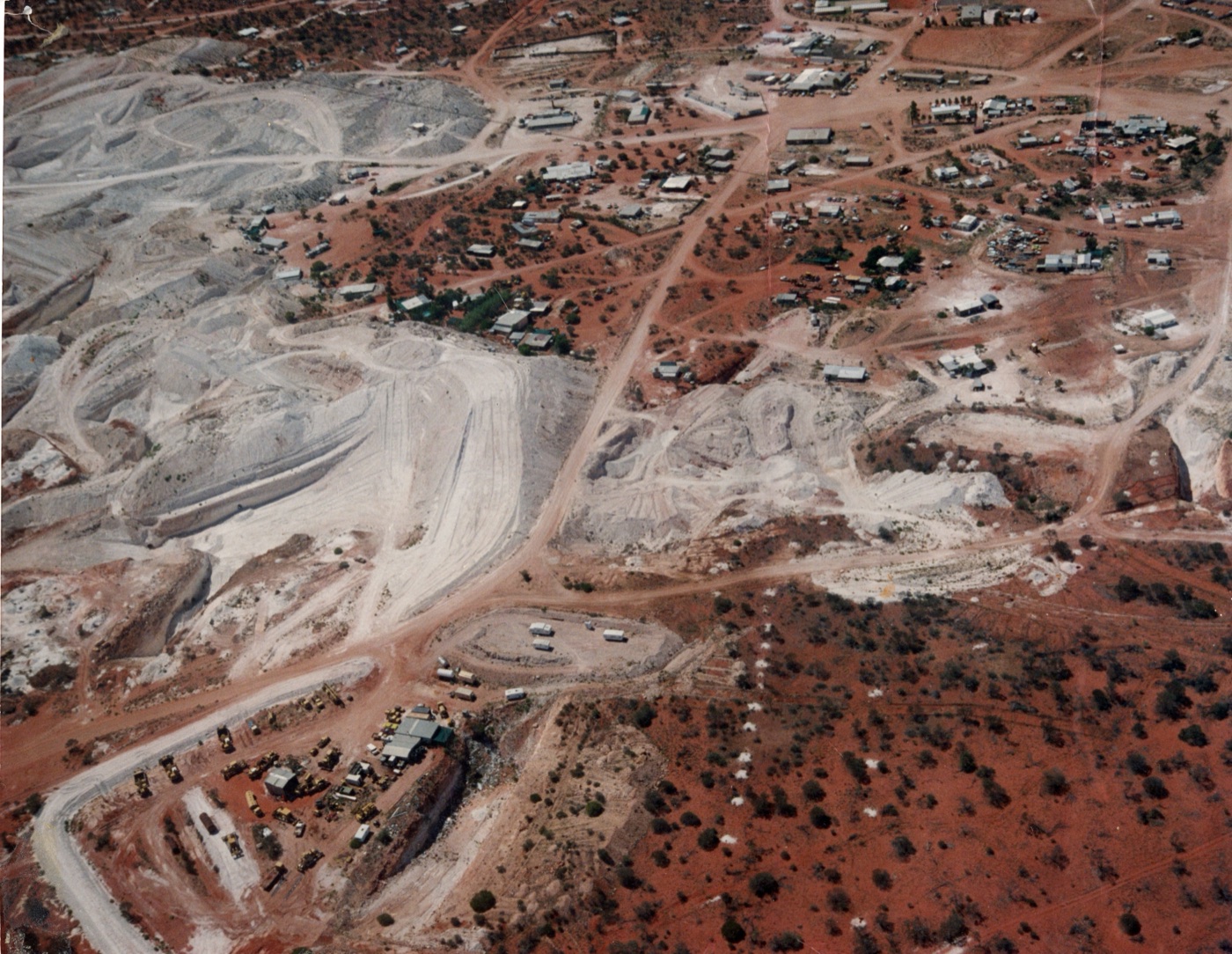
Aerial photograph of Mintabie township and opal workings, circa 1990
Mintabie from the air, circa 1990. The family camp is the entire lower-left of frame — machinery yard and the caravans above it.
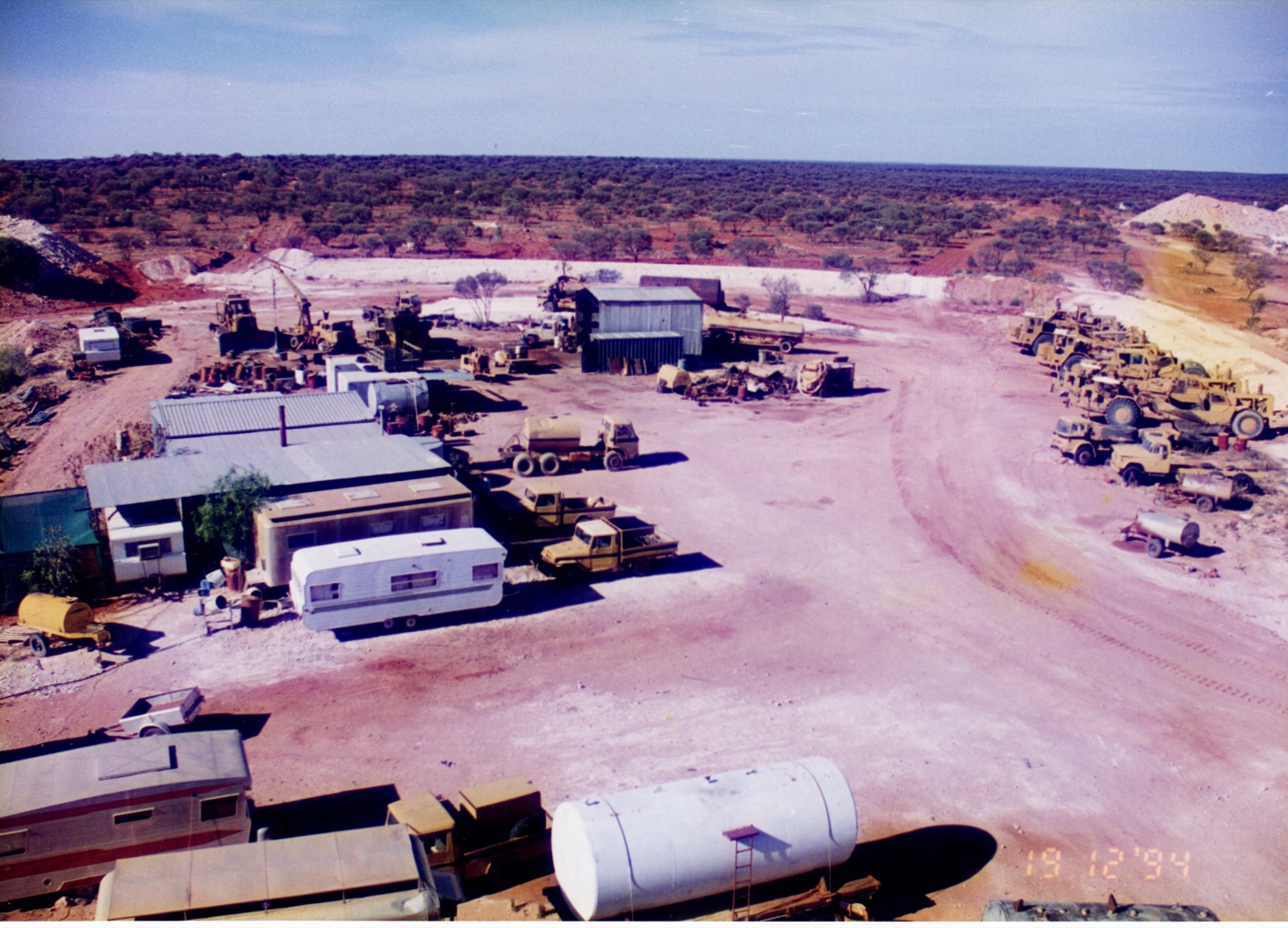
The Christianos camp at Mintabie in December 1994, caravans, sheds and machinery
The camp, December 1994 — seen from the rise where Emmanuel's caravan, and later his house, stood.
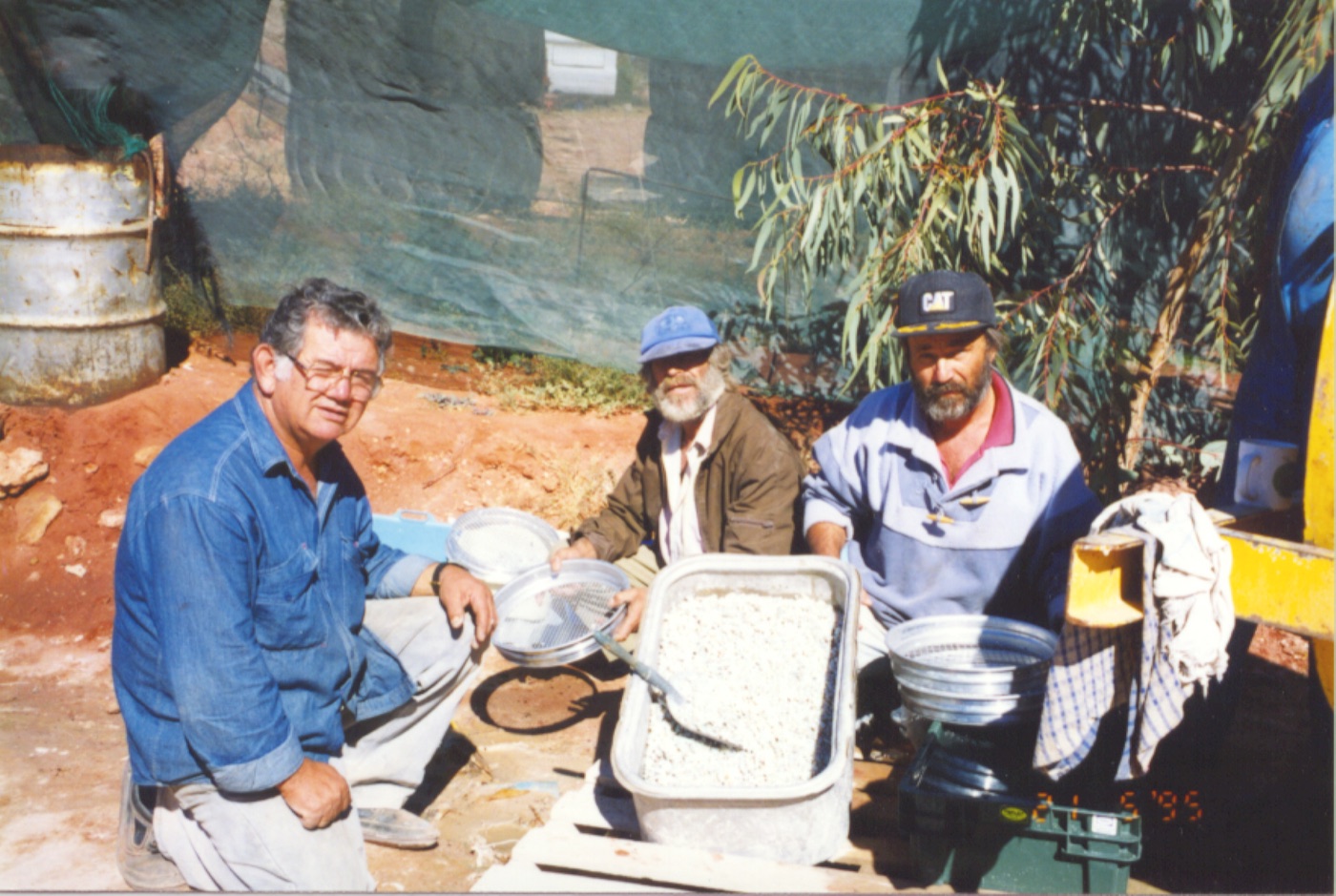
Emmanuel Christianos and crew washing opal chips in trays under shade cloth at the Mintabie camp, 1995
Washing opal chips at the camp, May 1995 — Emmanuel at left, Nikita at right.
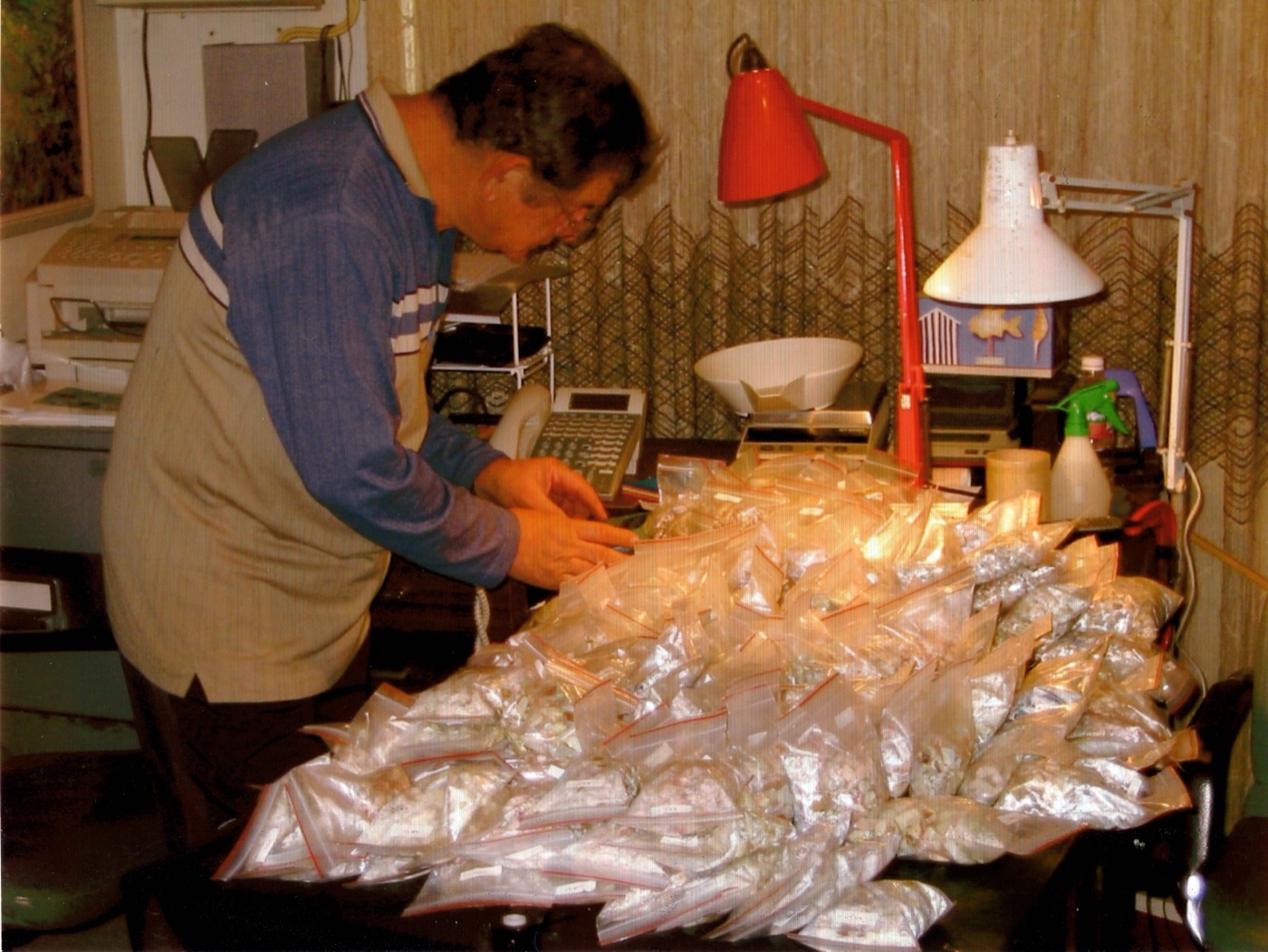
Emmanuel Christianos at a desk covered in bags of Mintabie rough opal, preparing a parcel for the Tucson gem show
Now that is a parcel: Emmanuel preparing Mintabie rough for the Tucson gem show.

2009 – today

Lightning Ridge: the third generation

Since 2009 the family has been based at Lightning Ridge, NSW — home of the black opal, the rarest and most valuable opal on earth. Today the business is run by George Christianos, Emmanuel's son and the third generation, who still goes down the shaft on the family's own claims.
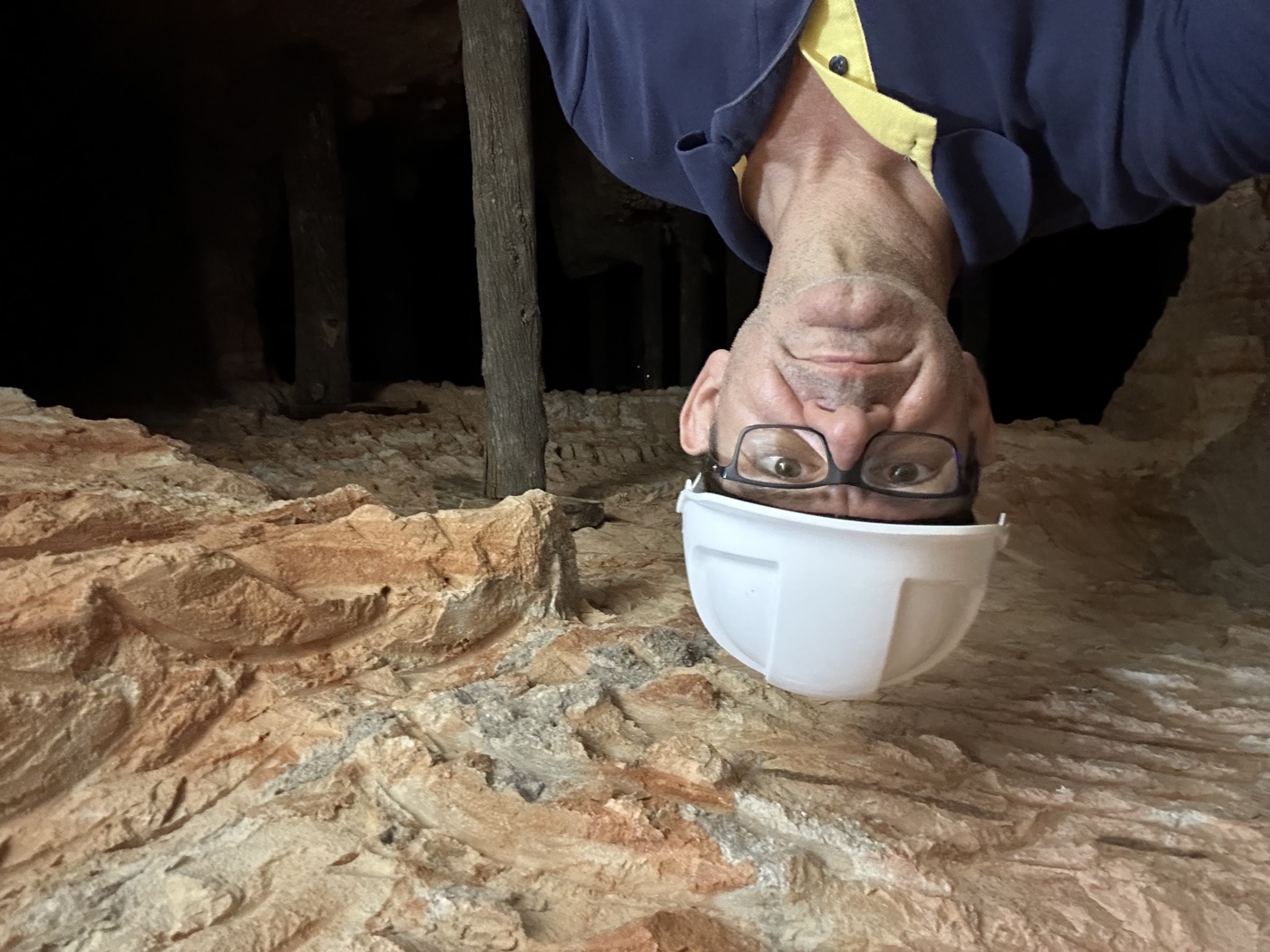
George Christianos underground in the family's opal mine at Lightning Ridge, hard hat on, timber props behind
George underground at Lightning Ridge — third generation, same trade.
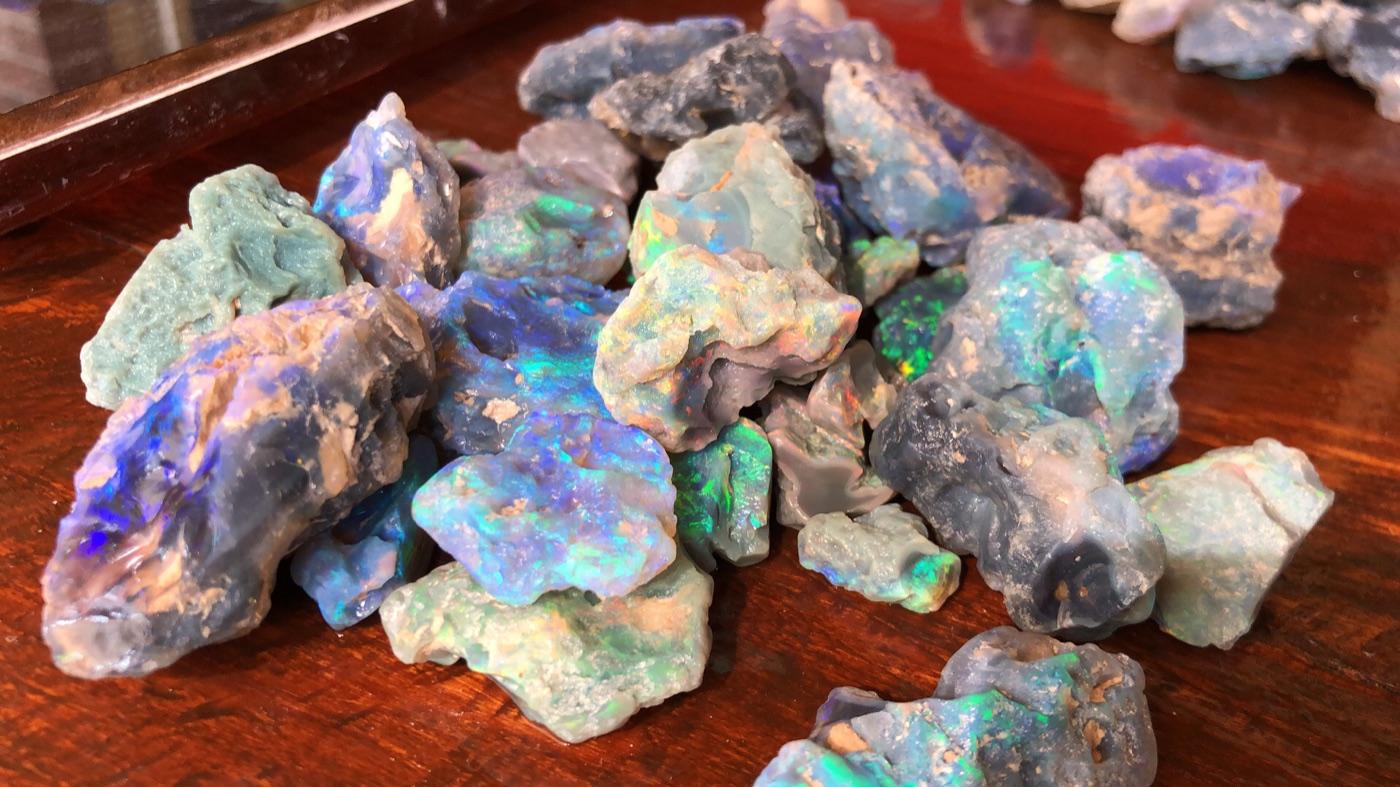
Rough Lightning Ridge black opal on a wooden table, showing blue and green colour through the potch
Typical Lightning Ridge rough — convoluted and low-yield, which is exactly why productive material is worth what it is.
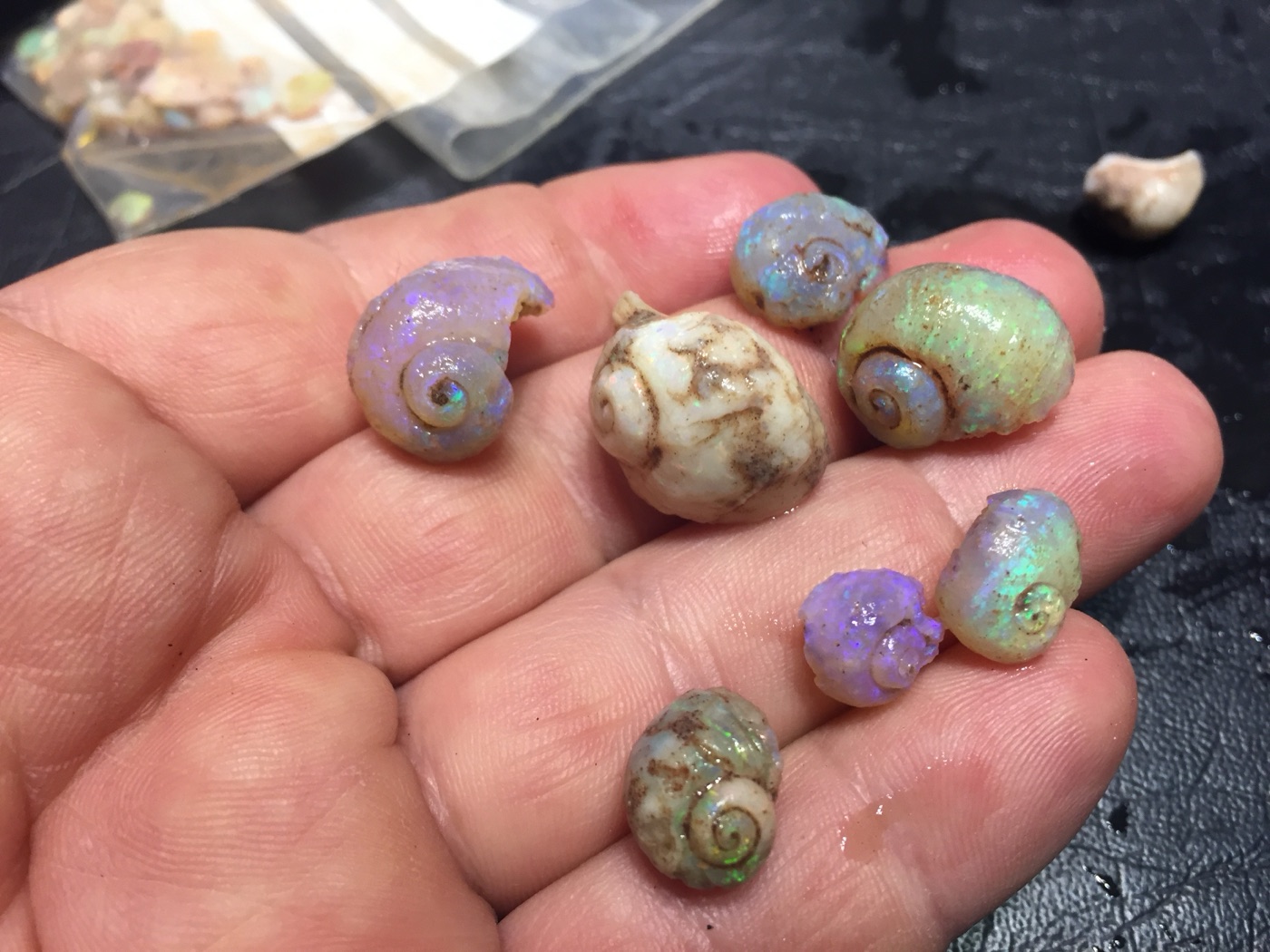
Rare opalised snail fossils from Lightning Ridge held in a hand, glowing purple and green
What the Ridge gives up: opalised snails — living creatures replaced, molecule by molecule, with precious silica. A story unto itself.

Why this history matters when you buy a stone

Almost anyone can call themselves an opal dealer. Very few can show you seventy years of their family in the dirt. When you buy from us, you are buying from the people who mine, grade, cut and certify the stone — with no middlemen and nothing to hide.

First-hand source Mined on our own claims or bought first-hand on the fields we have worked for three generations.
A certificate on every stone Every stone carries its own certificate with full specifications — type, body tone, brightness, weight and dimensions.
Verify it yourself Scan the QR code on your certificate and it resolves back to this site — what you hold matches what we published.
Guaranteed, in writing Natural Australian opal, never synthetic or treated — backed by our written guarantee and return policy.

Photographs by Emmanuel Christianos (d. 2013) and George Christianos. All images are the property of the Christianos family.